
Education
HBCUs as the No. 1 choice for Black grads
By Bradley Ross Jackson
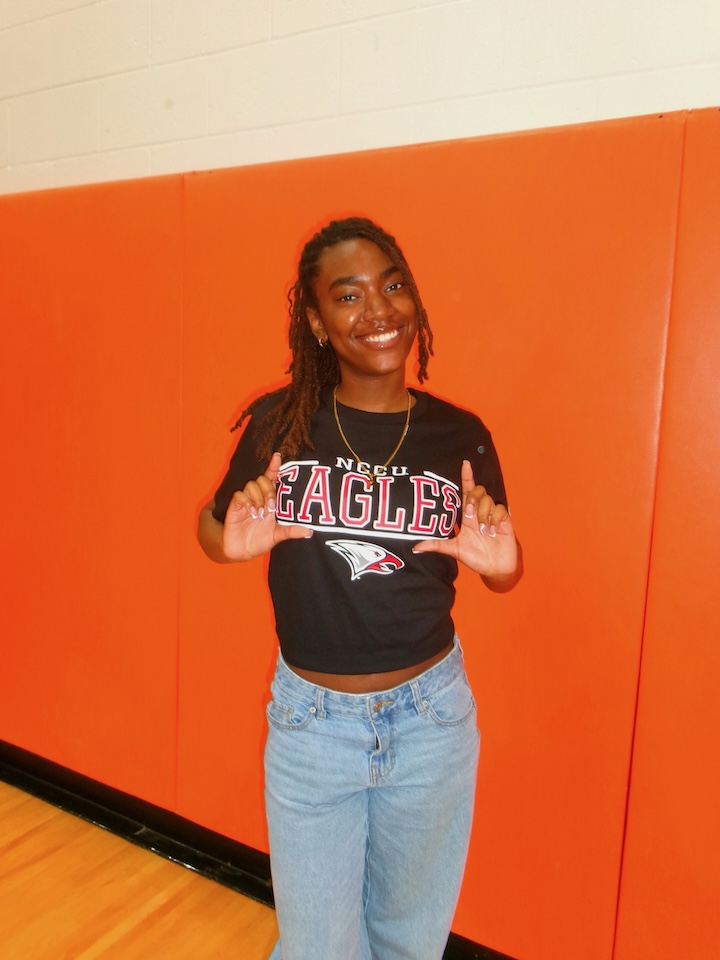
Khadirah Muhammad will start her freshman year at North Carolina Central University this fall with several goals in mind. She plans, as a collegian, to be a point of pride for her family. She will major in kinesiology, hoping to become a sports therapist.
And she will connect with a ton of African Americans also enrolled at that historically Black university.
“I chose an HBCU because I wanted to be around people who look like me and who want the best for me, who have similar goals and values,” Muhammad said, a 2026 graduate of Normal Community High School in Normal, Illinois. “I felt like it would be a place where I feel the most comfortable.”

Alabama A&M and Howard Universities saw their freshman population increase 23% between 2023 and 2024, according to a 2025 report from the National Educational Clearinghouse Research Center. All HBCUs saw enrollment rise 5.9% overall, according to the same report. According to a 2024 article in The Washington Post, several factors are driving HBCU enrollment increases. Students feel a sense of belonging on those campuses and are impressed by the financial and other support HBCU alumni give their alma mater.
While choosing North Carolina Central, Muhammad turned down scholarships from the University of Missouri, University of Illinois at Chicago, Northern Illinois University and Southern University Illinois at Edwardsville. Her parents, Muhammad said, will pay her way through North Carolina Central.
“You have your whole life to be a minority,” Muhammad said. “But, at an HBCU, that’s the time for you to be the majority.”
Muhammad continued. “It’s a community. Not that you don’t have it at a PWI, but it’s stronger at an HBCU. We are the blueprint. We are the foundation of a lot of things that happen in the world and I want to be at the center of it, at the root. The foundation, not the product. I want to be in the process, not the end result.”
Bryce Cager, in some ways, accidentally wound up at Morehouse College for men, most of whom are Black.

Bryce Cager
“I was never supposed to go to an HBCU,” said Cager, an insurance company legal compliance officer, who’d played football in college.
“Coming out of high school,” he said, “I had many scholarship offers to play football and I was supposed to end up in Davenport, Iowa, and attend St. Ambrose University. I had a full ride to play football. And, when I got there, I felt detached from everything I knew.”
His father had long hoped his son would attend Morehouse. So, Cager transferred. That fulfilled his father’s wish and benefited the son.
“My father played football as well. And he said he made the mistake of not going to Morehouse when being recruited. I thought to myself, ‘He really wants me to go here.’ And I always wanted to honor and respect my father,” Cager said.
After Cager pivoted, Morehouse offered him a scholarship. Cager played football for his freshman and sophomore years, made lifelong connections and immersed himself in Morehouse’s and Atlanta’s culture.
“The sense of camaraderie and the sense of family down there,” he said, “is something to boast about.”
Cager, who earned his bachelor’s degree in 2017, said his time at Morehouse College prepared him for success.
“Morehouse prepares you for any industry and any sector that you want to go into as a young Black male, especially navigating through corporate America,” he said. “It could be a little bit intimidating, but we are trained … not only from an academic standpoint, but from the development that Morehouse instills into us as men of culture and character.”